5 Texas-Tough Perennials That Thrive in DFW Flowerbeds Year After Year
5 Texas-Tough Perennials That Thrive in DFW Flowerbeds Year After Year
Quick answer: The five most reliable perennials for DFW flowerbeds are Knockout roses, lantana, black-eyed susans, autumn sage, and liriope — all proven to handle North Texas heat, alkaline clay soil, and drought once established. Adding a mix of these to an existing bed is typically a simple refresh running $400–$700, while a full new bed with edging and soil prep runs $800–$1,800. All five are available through our flowerbed installation service across Arlington, Mansfield, Fort Worth, and the rest of our DFW service area.
If you've ever planted something beautiful in spring only to watch it crisp and die by August, you know the pain of choosing the wrong plant for North Texas. The good news: there are plants that absolutely love DFW's heat, clay soil, and occasional drought — and they come back stronger every year.
Here are 5 perennials we install constantly across Arlington, Mansfield, and Kennedale because they simply work.
Why These Plants Specifically Survive North Texas Conditions
Most of our service area — Arlington, Mansfield, Fort Worth, Grand Prairie, Pantego, Kennedale, Bedford, and Hurst — sits in the Fort Worth Prairie (sometimes called the Grand Prairie) soil region: dark, alkaline clay that's often shallow over limestone. That soil sheds surface water fast after a rain but compacts hard just a few inches down, which is exactly the kind of tough love that kills less-adapted perennials while these five keep coming back stronger each year. Keller sits closer to the sandier Cross Timbers transition zone, so soil there can behave a little differently bed to bed — worth a quick check before assuming it drains and compacts exactly like Arlington clay.
1. Knockout Roses
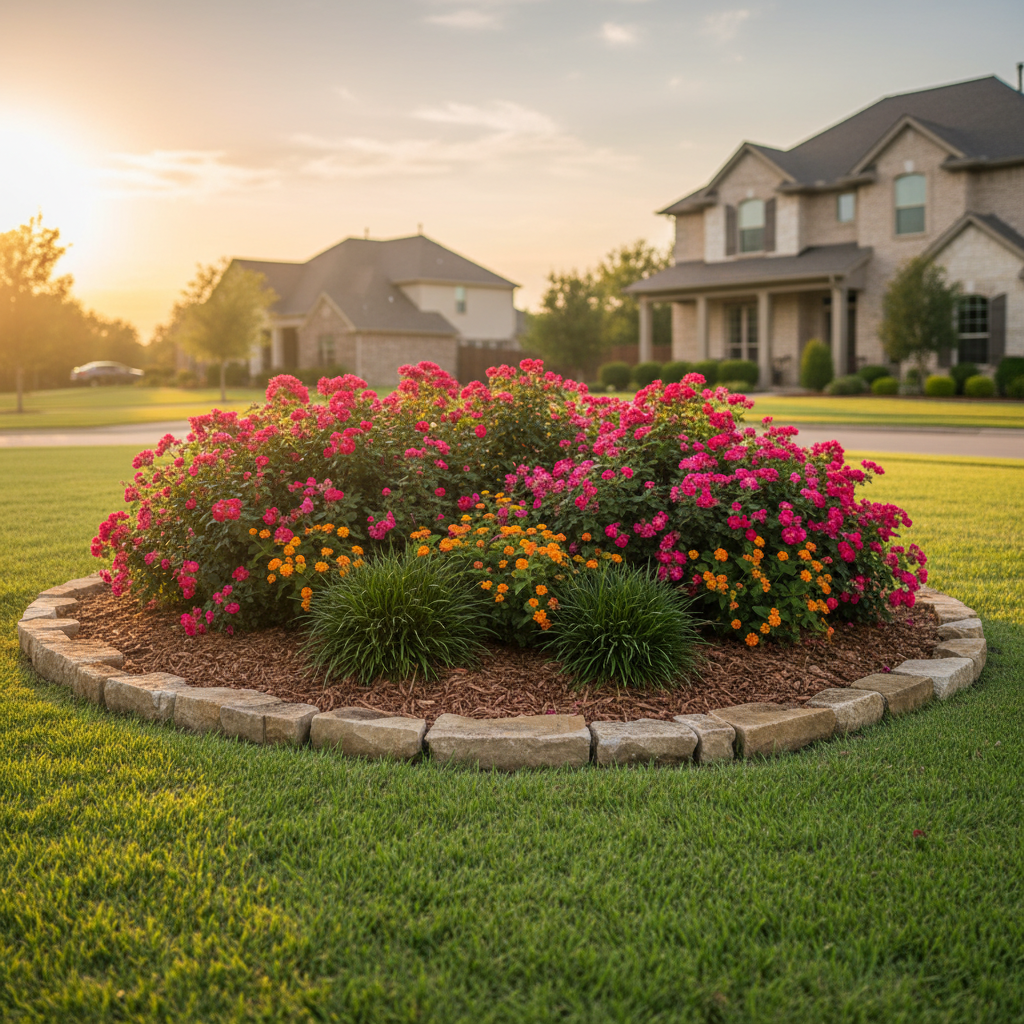
No plant earns its reputation more in DFW than the Knockout Rose. These shrubs bloom from spring all the way through fall — sometimes 10 months out of the year in North Texas — and they do it with almost no fuss.
Why we love them:
- Bloom continuously spring through frost
- Disease-resistant (unlike traditional roses)
- Available in red, pink, coral, and yellow
- Deer-resistant
- Drought-tolerant once established
Care notes: Full sun (6+ hours). Water weekly in summer. Cut back by one-third in late February for a big spring flush. They thrive in the 3-5 gallon size at installation.
Best paired with: Salvia, ornamental grasses, or liriope as border plants.
2. Lantana
Lantana is one of the hardest-working flowering perennials in Texas. It handles heat and drought that would kill most plants, and it rewards you with continuous clusters of orange, yellow, pink, and purple blooms from late spring through fall.
Why we love them:
- Blooms all summer even in 100°F+ heat
- Butterfly and hummingbird magnet
- Spreads beautifully to fill bed space
- Very low water needs once established
Care notes: Full sun. Once established, water deeply but infrequently. Cut back hard in spring before new growth emerges. Note: lantana is toxic to dogs and cats if ingested.
Best paired with: Knockout roses, black-eyed susans, and ornamental grasses.
3. Black-Eyed Susan
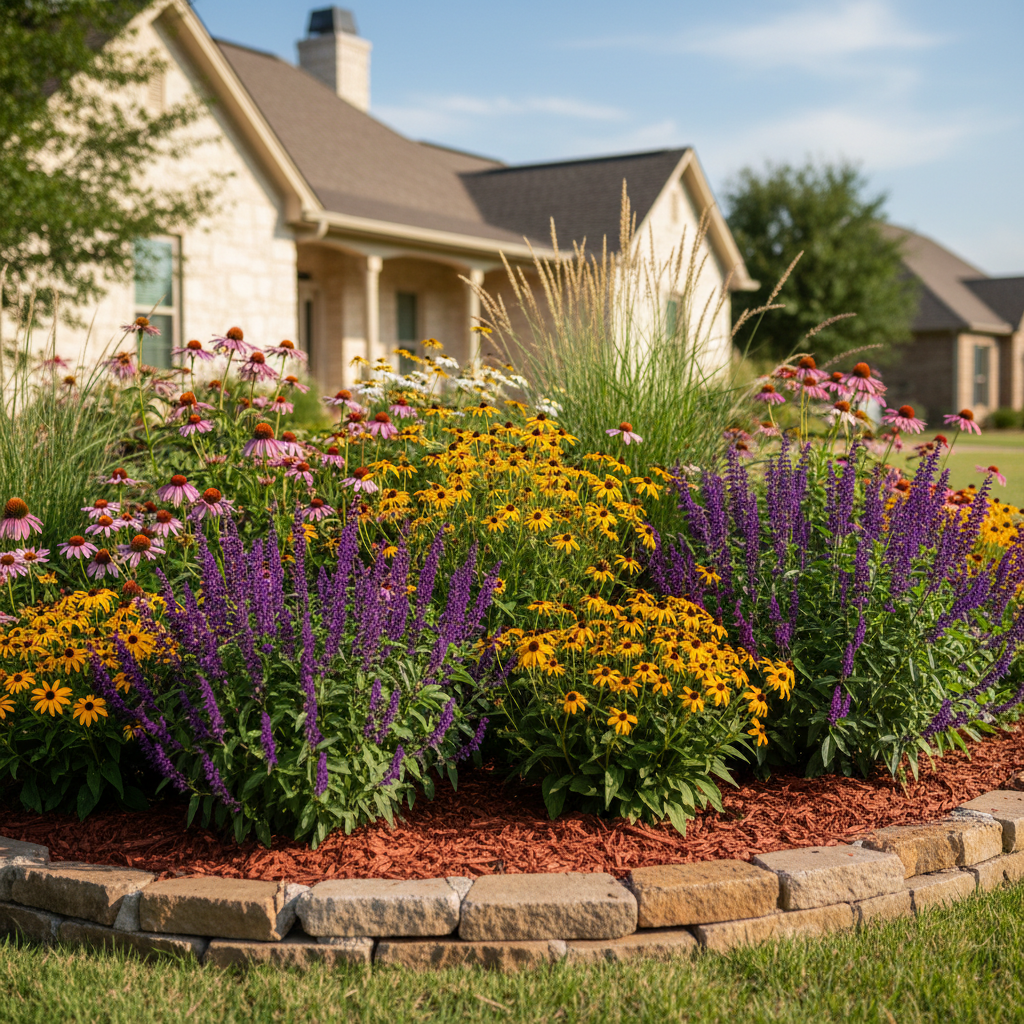
Black-eyed susans are Texas wildflower royalty. These cheerful yellow flowers with dark centers bloom heavily in late spring and early summer, then again in fall. They naturalize beautifully and spread over time.
Why we love them:
- Native to Texas — evolved to thrive here
- Bright yellow blooms that pop against dark mulch
- Self-seeds to fill in bare spots over time
- Drought tolerant, poor-soil tolerant
- Attracts pollinators
Care notes: Full sun to partial shade. Very low maintenance. Deadhead spent blooms to encourage more flowers. Divide clumps every 3-4 years to keep them vigorous.
Best paired with: Salvia, lantana, and ornamental grasses for a cottage-style wildflower look.
4. Autumn Sage
If you want long-season color that's almost impossible to kill in North Texas, autumn sage is your answer. It blooms from spring through the first hard freeze and handles summer heat without missing a beat.
Why we love them:
- Blooms nearly year-round in DFW
- Available in red, pink, coral, and white
- Hummingbird favorite
- Deer resistant
- Handles drought and clay soil
Care notes: Full sun. Water weekly until established, then very little. Shear back lightly after each bloom cycle to encourage reblooming. Cut back by half in late winter.
Best paired with: Ornamental grasses, liriope borders, or as a mid-height accent plant behind monkey grass.
5. Liriope (Monkey Grass)
Okay, liriope doesn't produce showy flowers — but it's arguably the most useful plant in the DFW landscaper's toolkit. It's virtually indestructible, stays evergreen through most North Texas winters, and provides the perfect low border or ground cover in both sun and shade.
Why we love them:
- Evergreen — looks good 12 months a year
- Thrives in full sun OR full shade (rare combination)
- Handles drought, clay, and foot traffic
- Produces pretty purple flower spikes in summer
- Spreads naturally to fill bed edges over time
Care notes: Cut back to 3-4 inches in late February before new growth emerges. That's it. Seriously. One of the lowest-maintenance plants in existence for North Texas.
Best paired with: Everything. Use it as a border plant around roses, salvia, or ornamental grasses in any bed design.
Put These Plants in Your Yard This Season
All five of these perennials are regularly stocked and installed by All American Landscape Co. across Arlington, Mansfield, Fort Worth, Grand Prairie, Kennedale, Pantego, Keller, Bedford, and Hurst. We'll help you design a flowerbed with the right plant mix for your specific sunlight, soil, and style.
Frequently Asked Questions
Do these perennials really survive Arlington and Fort Worth's clay soil? Yes — all five are chosen specifically because they tolerate compacted, alkaline clay once established. Proper soil prep at installation (breaking up and amending the top layer before planting) matters more than the plant choice itself.
What's the best time of year to plant perennials in DFW? Early fall (October–November) and early spring (March–April) are both good windows — mild temperatures let roots establish before summer heat or winter cold sets in. See our guide on the best time to install flowerbeds in Arlington for more detail.
How much does it cost to add these perennials to an existing bed? A simple refresh with 6–8 plants and fresh mulch typically runs $400–$700. A larger new bed with edging, soil prep, and a full plant palette runs $800–$1,800. See our full landscaping cost guide for pricing across every service.
Key Takeaways
- Knockout roses, lantana, black-eyed susans, autumn sage, and liriope are the five perennials we install most across DFW because they reliably survive our heat, drought, and alkaline clay soil.
- Most of our service area sits in the Fort Worth Prairie soil region — fast-draining on the surface, hard-compacting underneath — which is why soil prep at installation matters as much as plant choice.
- Adding these perennials to an existing bed typically runs $400–$700; a full new bed with edging and soil prep runs $800–$1,800.
- Fall and spring are the best planting windows in North Texas — avoid installing new perennials during peak summer heat if possible.
- All five plants are low-maintenance once established, needing mostly an annual cutback and occasional deep watering during drought.